
Last updated September 23, 2026
Free visual inspection and a written scope of work before any mitigation begins - photos, moisture readings, and drying logs go in your claim file
The scope we write is the scope we bill. Anything new gets shown to you, in writing, before we touch it.
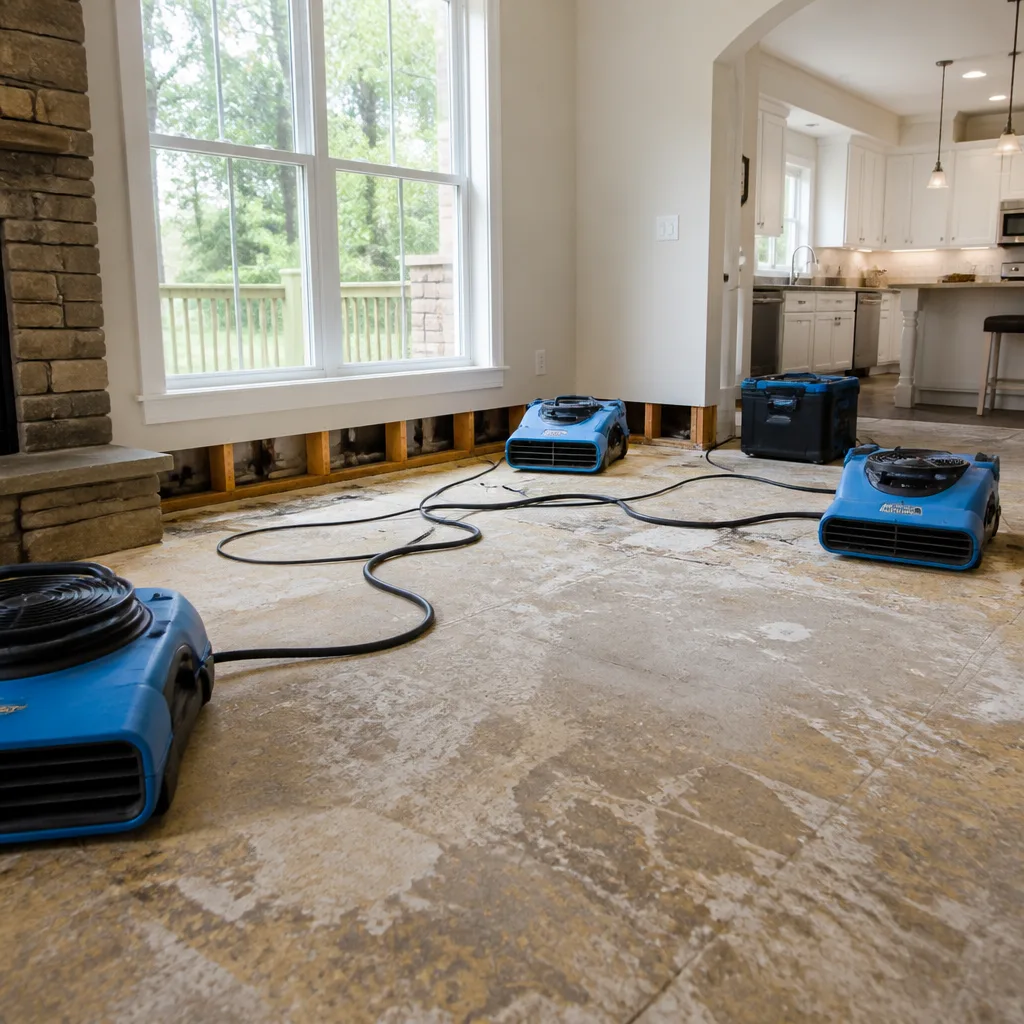

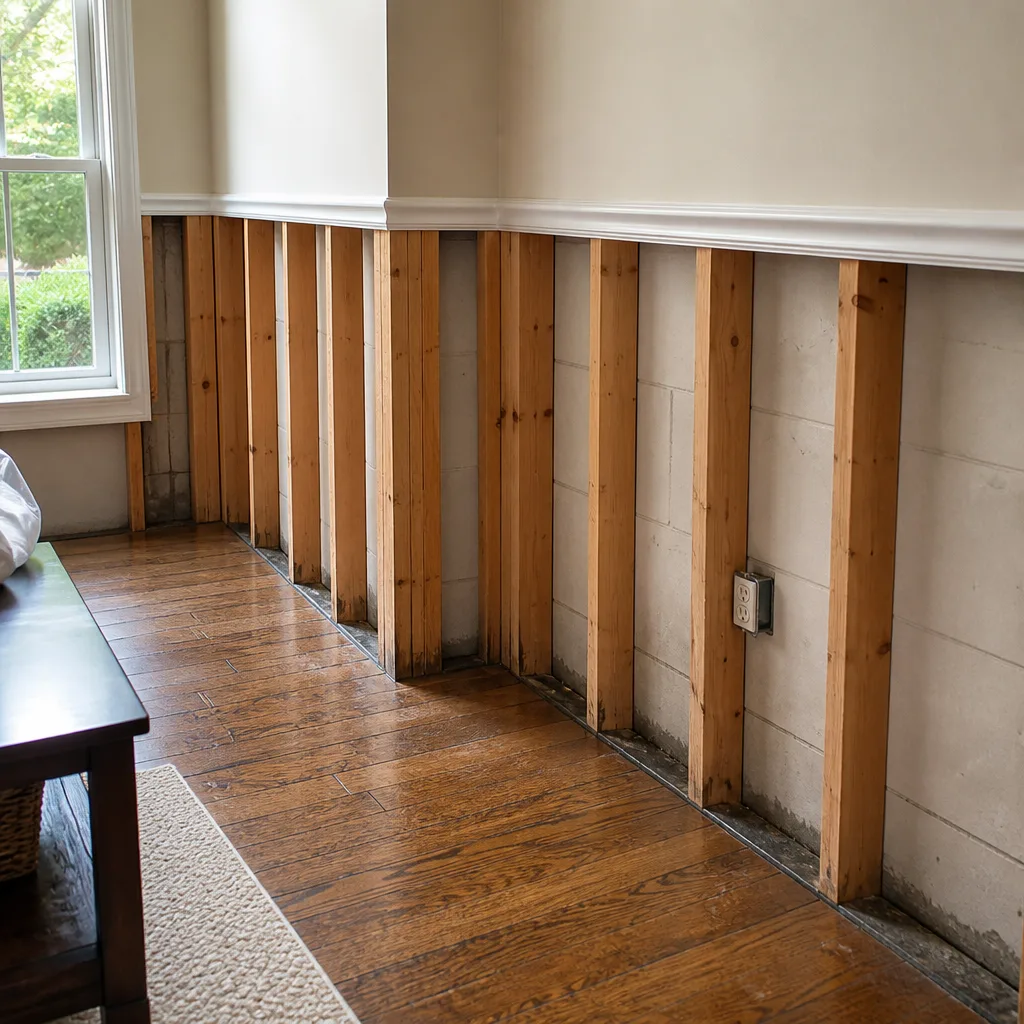



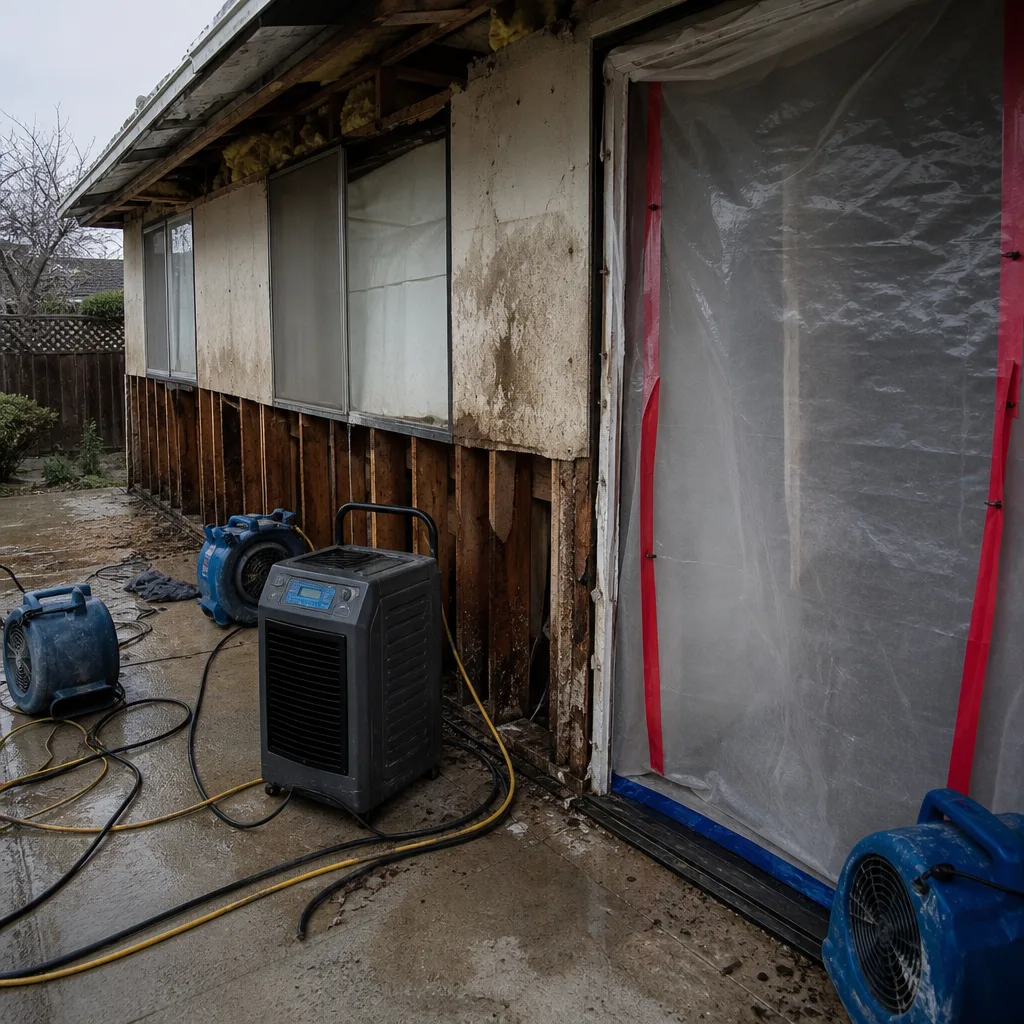 Before
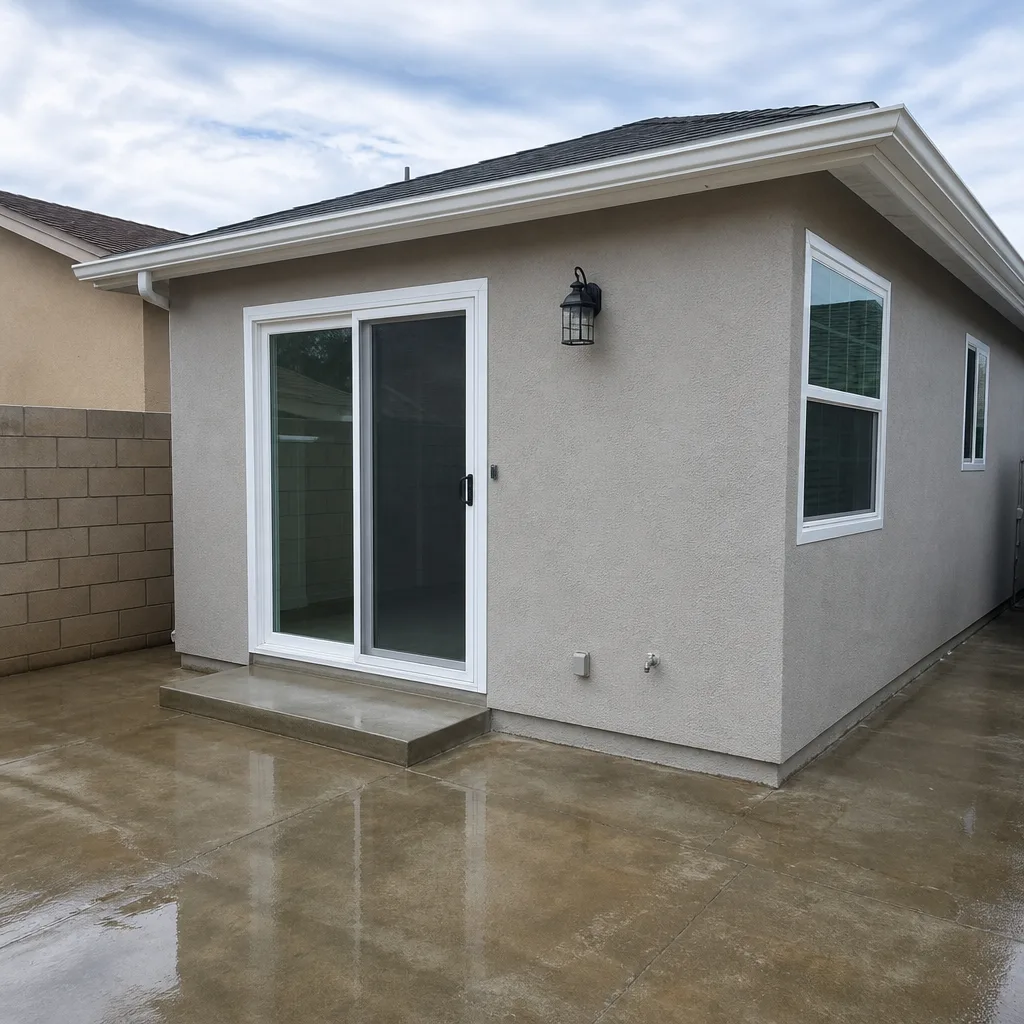 After
After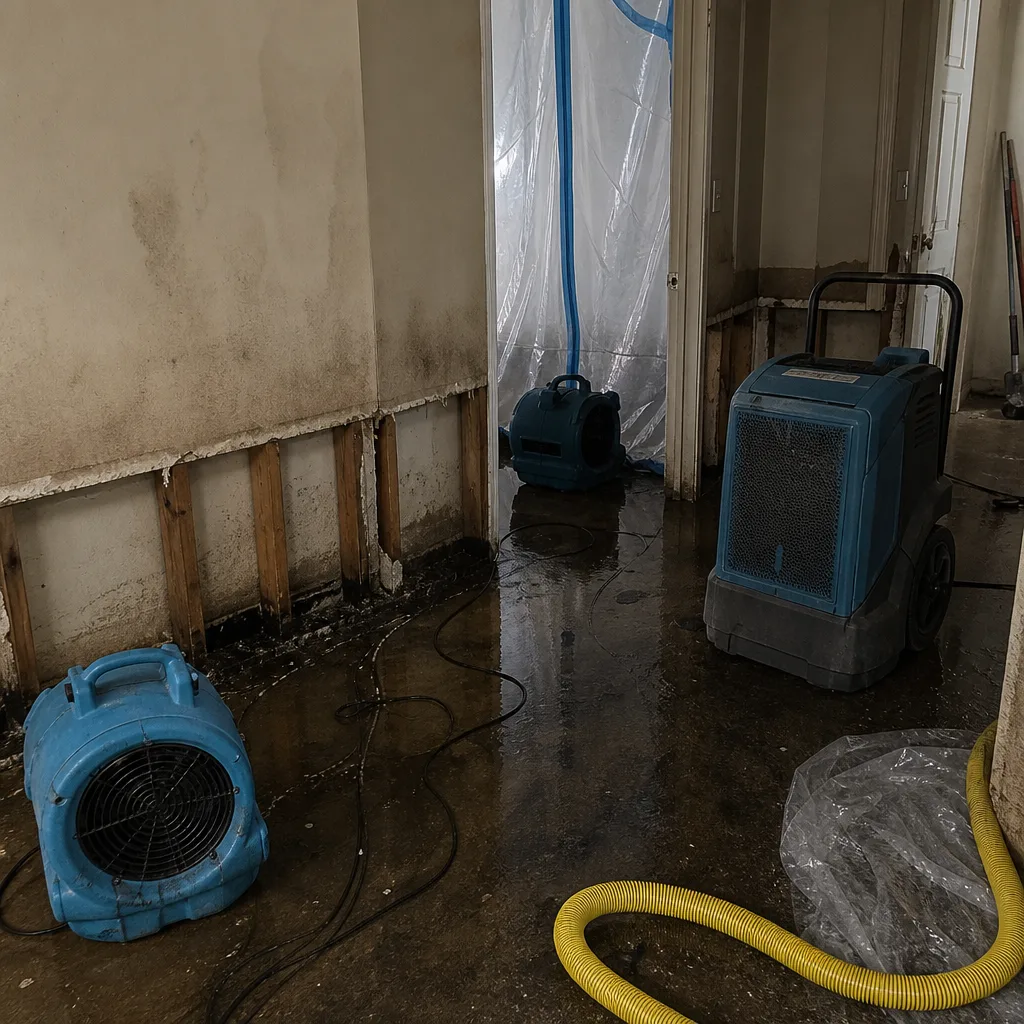 Before
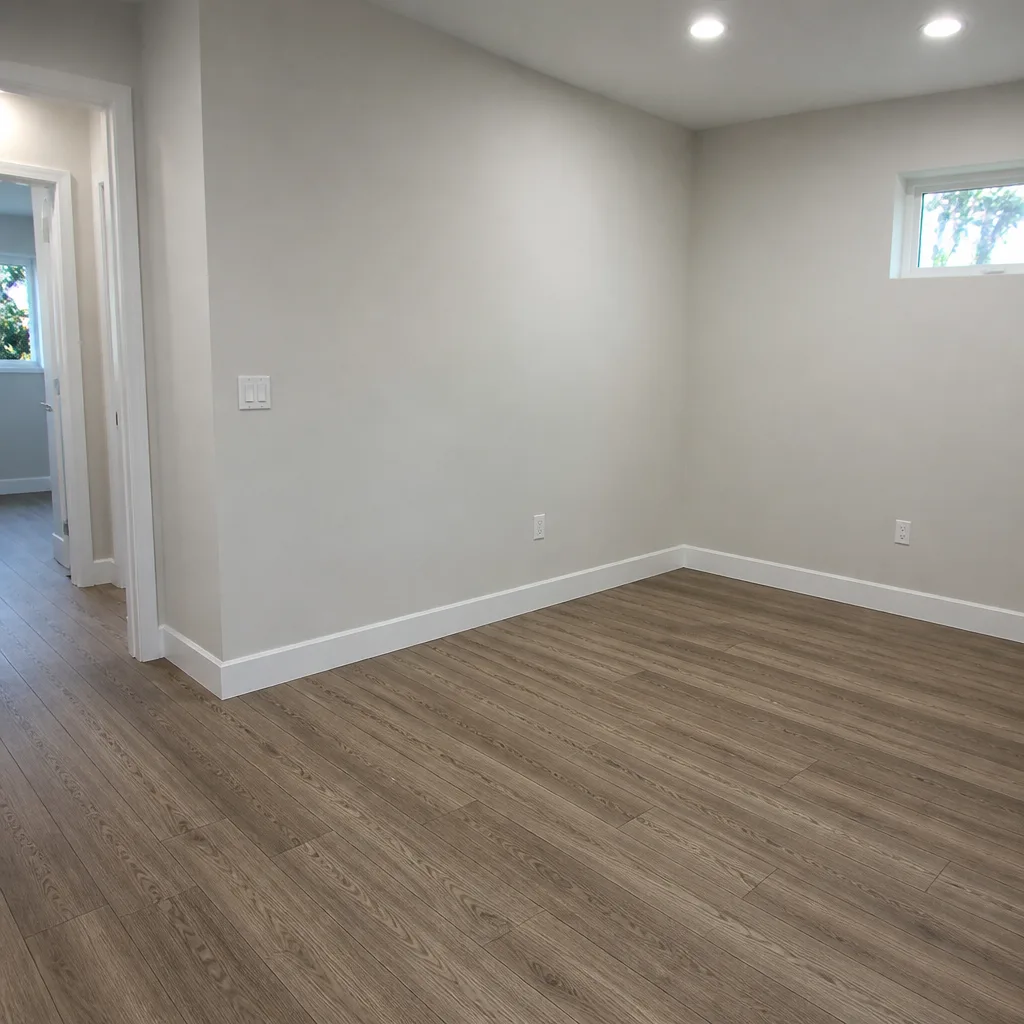 After
After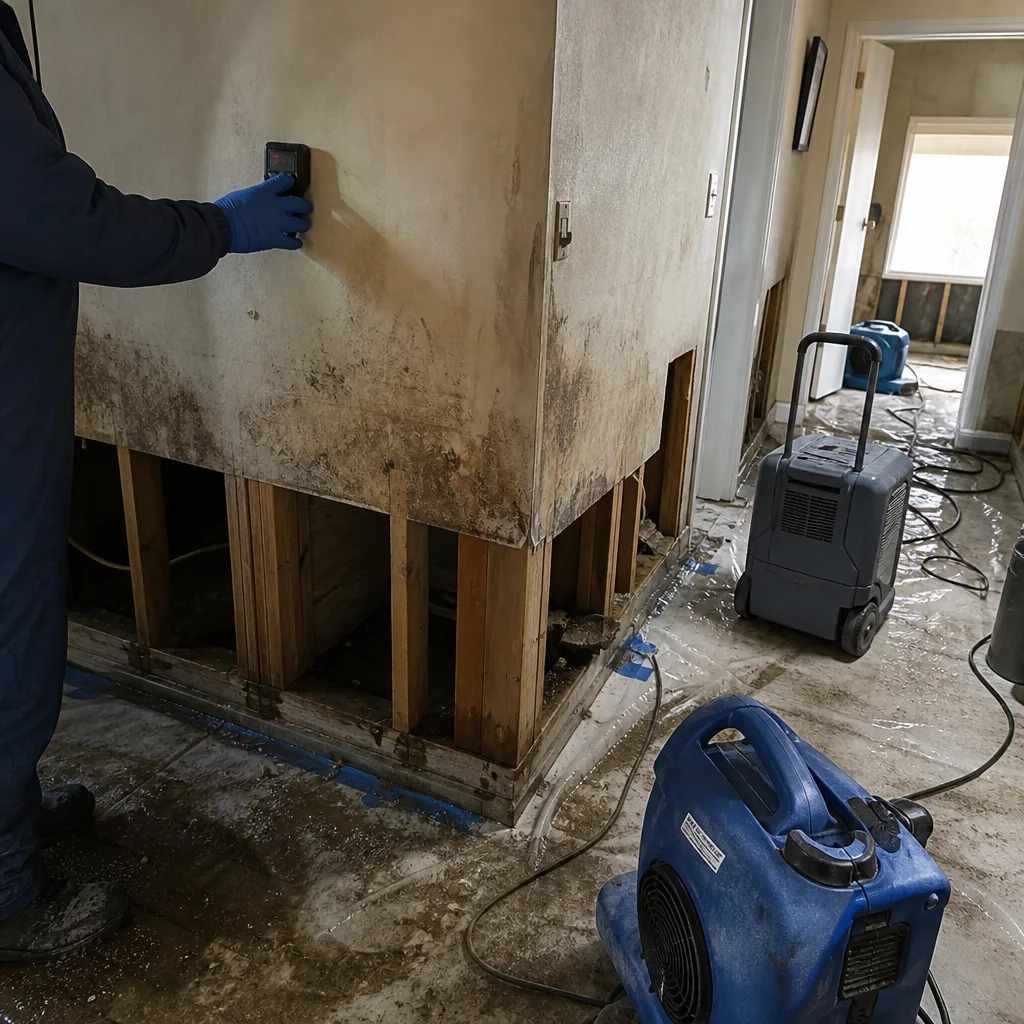 Before
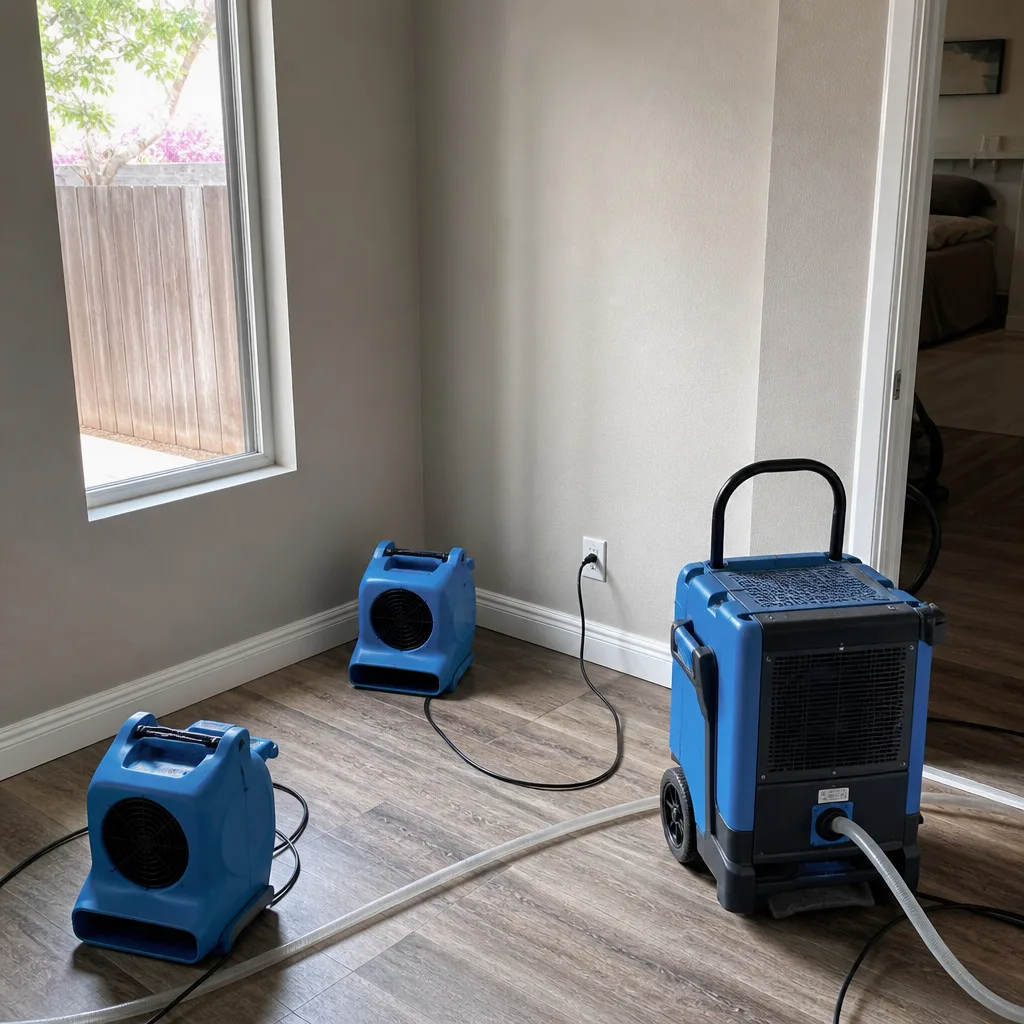 After
AfterDamage Restoration Warning Signs: A Anaheim Homeowner’s Reference Guide
A water stain on your ceiling that reads 12% moisture with a pin meter is old and dry. The same stain at 22% is actively wicking from a slow leak above - and treating both the same way is how mold colonies establish before anyone calls a contractor. In Anaheim, where clay soils in northeast neighborhoods cycle through expansion and contraction, and where older HVAC systems in pre-1980s housing stock still carry original galvanized condensate lines, the gap between what you see and what is actually happening inside your walls can cost tens of thousands in uncovered insurance claims. This guide shows you how to read the three languages of damage - visual, olfactory, and measurable - and what specific thresholds separate “watch it” from “act this week.”
Quick Answer
The most critical damage restoration warning signs in Anaheim homes are: moisture meter readings above 16% in wood framing or 1% above substrate baseline in drywall, musty odors that persist after 48 hours of ventilation, efflorescence (white mineral deposits) on concrete or stucco, and hairline stucco cracks wider than 1/16 inch that follow a stair-step pattern. These measurable indicators precede visible structural failure by weeks or months and are the documentation points that determine whether your insurance claim will be paid without dispute.
Table of Contents
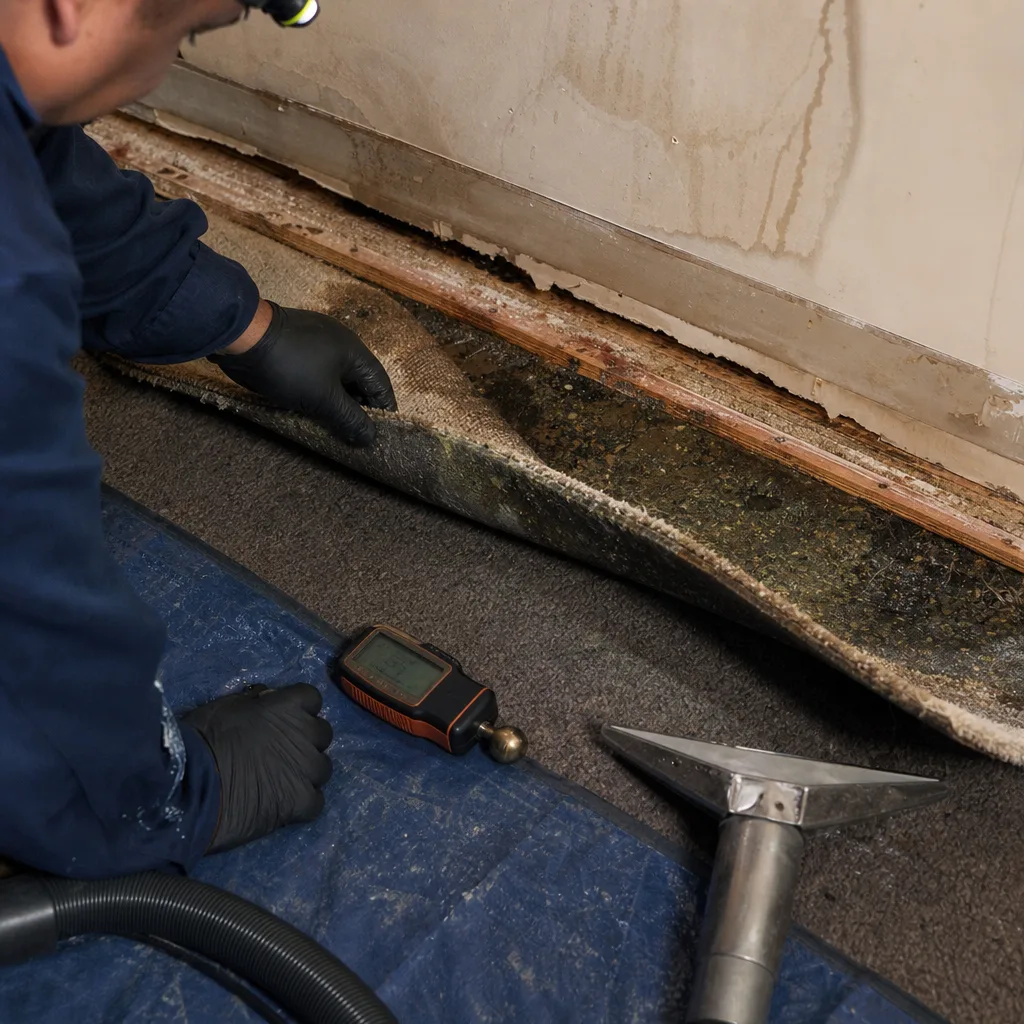
- Visual Indicators: Reading What Your Walls Are Showing You
- Olfactory Indicators: The Smells That Precede Visible Damage
- Measurable Indicators: Turning Hunches into Documented Readings
- Anaheim-Specific Structural Tells: Soil, Stucco, and Older Systems
- Hidden Warning Signs Inside HVAC Systems
- Efflorescence and Drainage: When White Powder Signals Real Trouble
- How to Use a $30 Moisture Meter Like a Restoration Technician
- The Documentation Gap: Why Measurements Beat Photos at Claim Time
 Before
 After
AfterVisual Indicators: Reading What Your Walls Are Showing You
Most Anaheim homeowners notice water damage when something looks wrong. The problem is that by the time something looks wrong, the underlying conditions have often been active for 30 to 90 days. Visual signs are lagging indicators, not leading ones. Still, knowing how to read them correctly separates a $400 repair from a $14,000 remediation.
Stains and discoloration. Brownish-yellow ceiling stains are the most common call driver we see in Anaheim’s single-family stock, particularly in the older neighborhoods near Anaheim Hills and the flatlands between the 91 and the 5. A stain with sharp, defined edges usually indicates an active, ongoing leak. Fuzzy or feathered edges suggest a past event that has dried. But “dried” does not mean “safe.” We have opened ceilings in homes near Kraemer Boulevard where a stain appeared dry to the touch yet registered 19% moisture in the joist bay above - well into the range where Aspergillus and Penicillium species colonize within 72 hours.
Warped baseboards and door casings. Wood trim that pulls away from the wall, or crown molding that no longer sits flush, indicates either direct water contact or sustained humidity above 70% relative humidity. In Anaheim’s coastal-influenced climate, where morning marine layer moisture can push interior humidity to 65% without any plumbing failure, this distinction matters. Warping from humidity alone tends to be uniform across a room. Warping from a localized leak is asymmetric - one corner of the baseboard swells while the rest stays true.
Peeling paint and bubbling drywall tape. Latex paint is vapor-permeable; it lets moisture pass. When you see paint bubbling or drywall tape lifting, the moisture behind it is moving faster than the paint can release it. This is a pressure event, not a slow seep. Common causes in Anaheim: failed shower pan membranes in 1970s-era bathrooms, irrigation overspray against stucco walls with compromised weep screeds, and - increasingly - condensate overflow from attic-mounted air handlers whose secondary drain pans have rusted through.
Key visual thresholds:
- Stain diameter growth of more than 1 inch in 7 days: active leak, not residual
- Baseboard gap exceeding 1/8 inch from wall plane: structural moisture involvement
- Paint bubbles containing liquid when punctured: immediate intervention needed
- Multiple stains in a diagonal or vertical line: likely supply line or drain stack failure
Visual inspection is where documentation starts, not where it ends. Every visual finding needs a moisture reading to determine whether the condition is historical or active. That reading becomes the first entry in your drying log - the document that will accompany your insurance submission if remediation is required.
Olfactory Indicators: The Smells That Precede Visible Damage
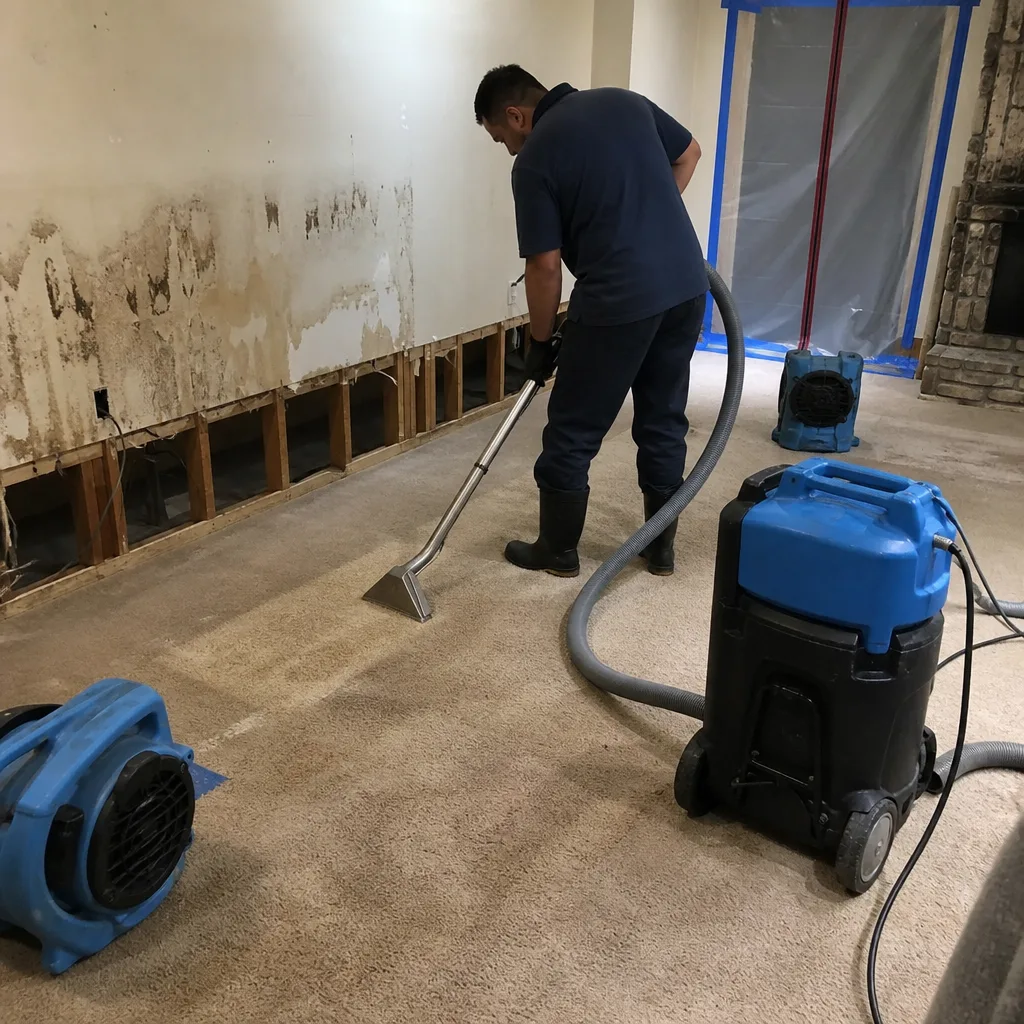
Your nose is a more sensitive moisture detector than your eyes. The human olfactory system can detect mold volatile organic compounds (mVOCs) at concentrations below 1 part per billion - far below the threshold of most consumer air quality monitors. But smell is also the most misinterpreted warning sign, because Anaheim’s environmental conditions create odor sources that mimic damage.
Musty odor. The classic “basement smell” is actually a cocktail of microbial metabolites: geosmin (earthy), 1-octen-3-ol (mushroom-like), and various aldehydes. In Anaheim, where slab-on-grade construction is standard and where the water table sits high enough in some areas to create capillary rise through foundation perimeters, musty odors often appear before any visual sign. The critical question is persistence. A musty smell that dissipates within 24 hours of running the HVAC fan or opening windows is likely environmental humidity. A musty smell that returns within 4 hours of ventilation ending indicates an active moisture reservoir - wall cavity, subfloor, or soil interface.
Sulfur or rotten-egg odor. This demands immediate differentiation. Hydrogen sulfide from sewer gas (dry P-trap, compromised wax ring, or vent stack blockage) is a health hazard and requires a plumber. Sulfur-producing bacteria in water heaters create a similar smell at taps but not in ambient air. True microbial sulfur odors from drywall or framing are rare and usually indicate advanced anaerobic conditions - typically in flood scenarios, not slow leaks. If you smell sulfur in Anaheim’s older flatland neighborhoods where original cast-iron sewer laterals remain in service, call a plumber first, then assess for water damage.
Sharp, metallic, or chemical odor. Often misattributed to “new construction smell” or cleaning products. In restoration, this profile frequently signals active corrosion of galvanized steel in contact with wet wood - the classic “nail pop” scenario where fasteners oxidize and off-gas. In Anaheim’s pre-1975 housing, where galvanized supply lines and unlined ductwork are still common, this smell can precede a ceiling collapse by weeks. It also appears when fire-retardant chemicals in older insulation become wet and hydrolyze.
Odor tracking protocol:
- Note the time of day - odors often strengthen as temperature rises and vapor pressure increases
- Check proximity to plumbing walls, exterior walls, and HVAC returns
- Run the HVAC fan continuously for 2 hours; if odor intensifies, suspect condensate or duct contamination
- Document with date, time, weather conditions, and exact location - this becomes evidence if the source is later found to be a covered peril
We have documented cases in Anaheim’s Colony Park neighborhood where homeowners lived with a “slight mustiness” for 14 months before discovering 40 square feet of hidden Stachybotrys growth behind a shower valve wall. The odor was present from month two. The visual sign never appeared - the colony was on the exterior sheathing, not the interior drywall.
Measurable Indicators: Turning Hunches into Documented Readings
Every visible warning sign has a measurable correlate. The measurement is what transforms a homeowner’s concern into a claim document. It is also what prevents unnecessary demolition - and unnecessary expense.
Moisture content in building materials. Wood framing in Southern California typically equilibrates to 9-12% moisture content (MC) in normal conditions. Elevated begins at 16%. Active microbial growth risk begins at 20%. These are not opinions; they are the reference ranges published by the USDA Forest Products Laboratory and adopted by IICRC S500, the water damage restoration standard. When we deploy Water Damage Restoration in Anaheim, our technicians record MC on every structural member, every visit, using calibrated pin meters.
Relative humidity (RH) and dew point. Indoor RH should stay between 30% and 60%. Above 60%, dust mite populations explode and mold spore germination rates increase exponentially. In Anaheim, where summer temperatures can reach 95°F with RH below 40%, the danger zone is actually the cooler months - December through March - when marine layer influence keeps RH elevated for 12-16 hours daily and interior surfaces can fall below dew point. A $15 digital hygrometer placed in the suspect room for 48 hours will reveal whether your HVAC system is maintaining control or whether a hidden moisture source is overwhelming it.
Vapor pressure differential. This is the engine that drives moisture movement. Warm, moist air has high vapor pressure; cool surfaces have low vapor pressure. The difference between them determines how fast moisture migrates through materials. In Anaheim stucco construction, a 20°F temperature differential between interior and exterior in January can create vapor pressure conditions that drive interior moisture into wall cavities - even without a plumbing leak. Understanding this explains why some “mystery” mold appears only on north-facing walls in winter.
Reference table: moisture content thresholds by material
| Material | Normal Range | Elevated (Monitor) | Action Required |
|---|---|---|---|
| Softwood framing (2×4, 2×6) | 9-12% | 13-16% | 17%+ |
| Hardwood flooring | 6-9% | 10-12% | 13%+ |
| Paper-faced drywall | 0.5-1.0% | 1.1-1.5% | 1.6%+ |
| Concrete slab (at grade) | 3-5% by weight | 6-8% | 9%+ or visible efflorescence |
| OSB/plywood subfloor | 8-12% | 13-16% | 17%+ |
The measurement that matters most is the trend, not the single reading. A drywall MC of 1.2% is elevated but stable. The same reading increasing 0.3% per day for five days indicates an active, ongoing moisture source that will eventually breach the action threshold. Our drying logs - produced on every DryMark Restoration Anaheim home job - graph these trends so insurers can see that remediation was driven by data, not discretion.
Anaheim-Specific Structural Tells: Soil, Stucco, and Older Systems
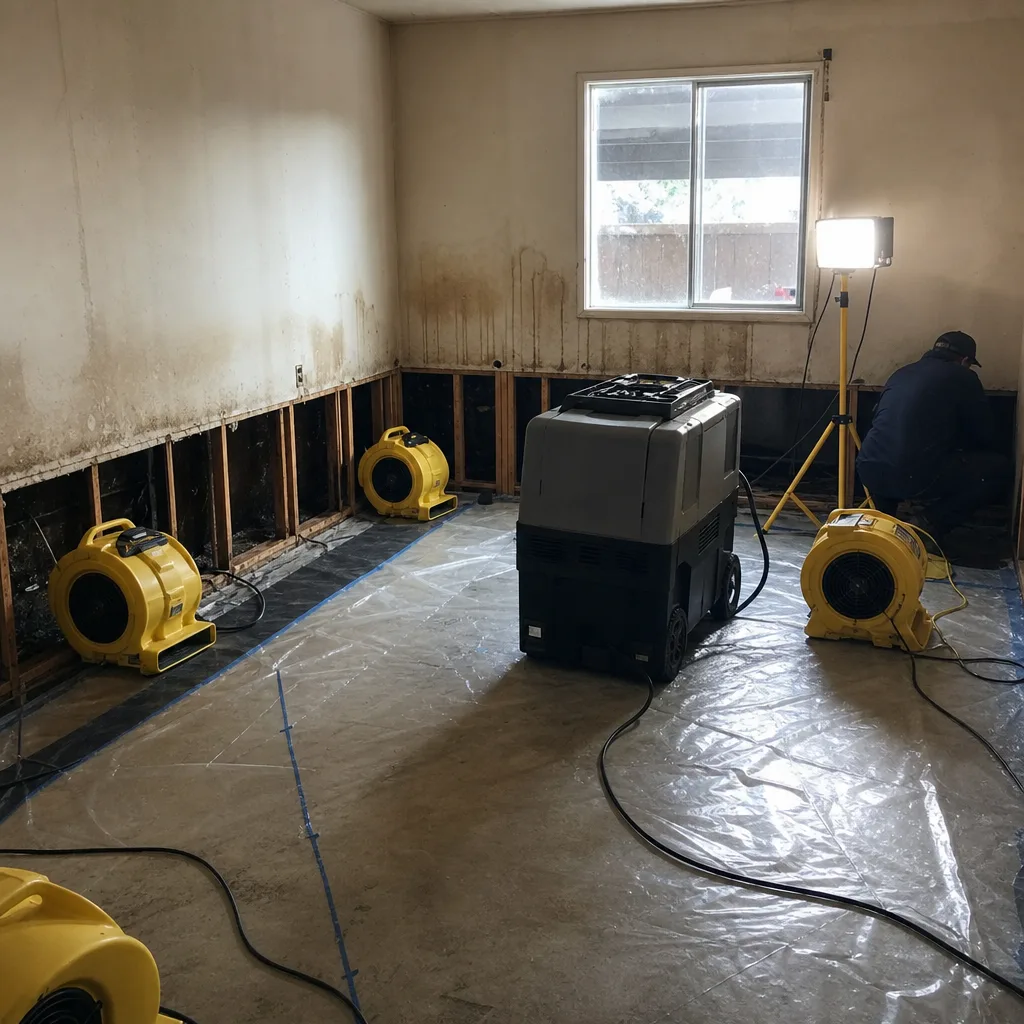
Anaheim’s geology and construction history create warning signs that do not appear in generic damage guides. Understanding them prevents misdiagnosis and protects your claim documentation.
Hairline stucco cracks and foundation soil movement. The northeast Anaheim neighborhoods - Anaheim Hills, East Anaheim, and the slopes above the 91 - sit on expansive clay soils of the Puente Formation. These soils swell when wet and shrink when dry, creating seasonal foundation movement of 1/4 to 1/2 inch in extreme years. The warning sign is not cracking itself; stucco cracks. The warning sign is pattern and progression.
Stair-step cracks at door and window corners, or horizontal cracks that widen from hairline to 1/8 inch within a single rainy season, indicate differential settlement that has compromised the waterproofing membrane behind the stucco. Once that membrane is breached, water enters the stud cavity with every irrigation cycle or heavy rain. We have documented homes near Nohl Ranch Road where exterior wall sheathing reached 28% MC - structural failure range - while interior drywall showed only a slight texture irregularity. The stucco crack was the only visible clue, and it had been present for three years.
Flatland foundation issues. In Anaheim’s older flatland neighborhoods - the Original Anaheim Colony, West Anaheim, and the industrial-residential transition zones - many homes sit on unreinforced concrete slabs poured directly on native soil without moisture barriers. Capillary rise can push groundwater into slab edges year-round. The warning sign is efflorescence at the slab-to-wall interface, or vinyl flooring that releases from the concrete in a bubble pattern. These homes need perimeter drainage assessment, not just surface drying.
Original galvanized plumbing. Anaheim’s pre-1970 housing stock frequently contains original galvanized steel water supply lines. These fail from the inside out; the first warning is reduced flow at fixtures, followed by rust particles in aerator screens, followed - catastrophically - by split lines inside walls. The average service life in Anaheim’s moderately hard water is 40-60 years. If your home was built before 1965 and has not had a supply line replacement, the absence of visible leaks is not reassuring. It is a timeline.
Earthquake retrofit gaps. Post-1994 retrofit work in Anaheim often involved bolting sill plates and adding shear panels. Done correctly, this improves structural performance. Done poorly - with gaps left between new shear panels and existing stucco - it creates water intrusion paths that did not exist before. We see this most often in garage conversions and room additions where the original waterproofing plane was interrupted.
Hidden Warning Signs Inside HVAC Systems
In Anaheim’s climate, air conditioning runs 6-8 months annually. The HVAC system is simultaneously the largest dehumidifier in the home and the most common hidden moisture source. The warning signs are accessible to any homeowner willing to look.
Condensate line scale buildup. The PVC drain line from your indoor coil carries water year-round. In Anaheim’s hard water (typically 250-350 ppm calcium carbonate), mineral scale accumulates at 1-2 mm annually in lines with inadequate slope or low flow velocity. White or greenish crystalline deposits at joints or the termination point indicate restricted flow. A partially blocked line does not overflow immediately; it backs up into the pan, evaporates slowly, and elevates humidity in the attic or closet for weeks before triggering the float switch. By then, the secondary pan may be corroded through.
Drain pan discoloration. A new galvanized or stainless secondary pan is silver-gray. Rust staining - orange-brown streaking - indicates standing water history. In Anaheim’s older housing, original steel pans installed in the 1970s and 1980s have often reached end of life. A pan with pinhole corrosion can release condensate into ceiling insulation for months before any ceiling stain appears. The warning sign is access: if your pan is visible, photograph it seasonally. If it is buried in insulation, that insulation itself becomes your indicator - compression, discoloration, or musty odor near the air handler location.
Supply plenum rust. The sheet metal box that connects your air handler to the duct system should show no corrosion on its interior surfaces. Rust here indicates return air leakage - the system is pulling humid attic air across cold metal, causing condensation. This is both an efficiency problem and a moisture source. In Anaheim, where attic temperatures can reach 140°F in August, the temperature differential amplifies the effect.
Flex duct condensation. Insulated flex duct in ventilated attics can sweat on its exterior when attic humidity is high and duct air temperature is low. The warning sign is darkening of the duct insulation jacket, or water spots on the ceiling below duct runs. This condition is often misdiagnosed as a roof leak. The actual cause is duct leakage or inadequate insulation R-value for the attic environment.
We recommend a seasonal HVAC inspection protocol: visual check of the condensate line termination, flashlight inspection of the drain pan (if accessible), and a humidity reading at the return grille. These three checks take 10 minutes and have prevented more ceiling replacements in Anaheim than any other homeowner action we have observed.
Efflorescence and Drainage: When White Powder Signals Real Trouble
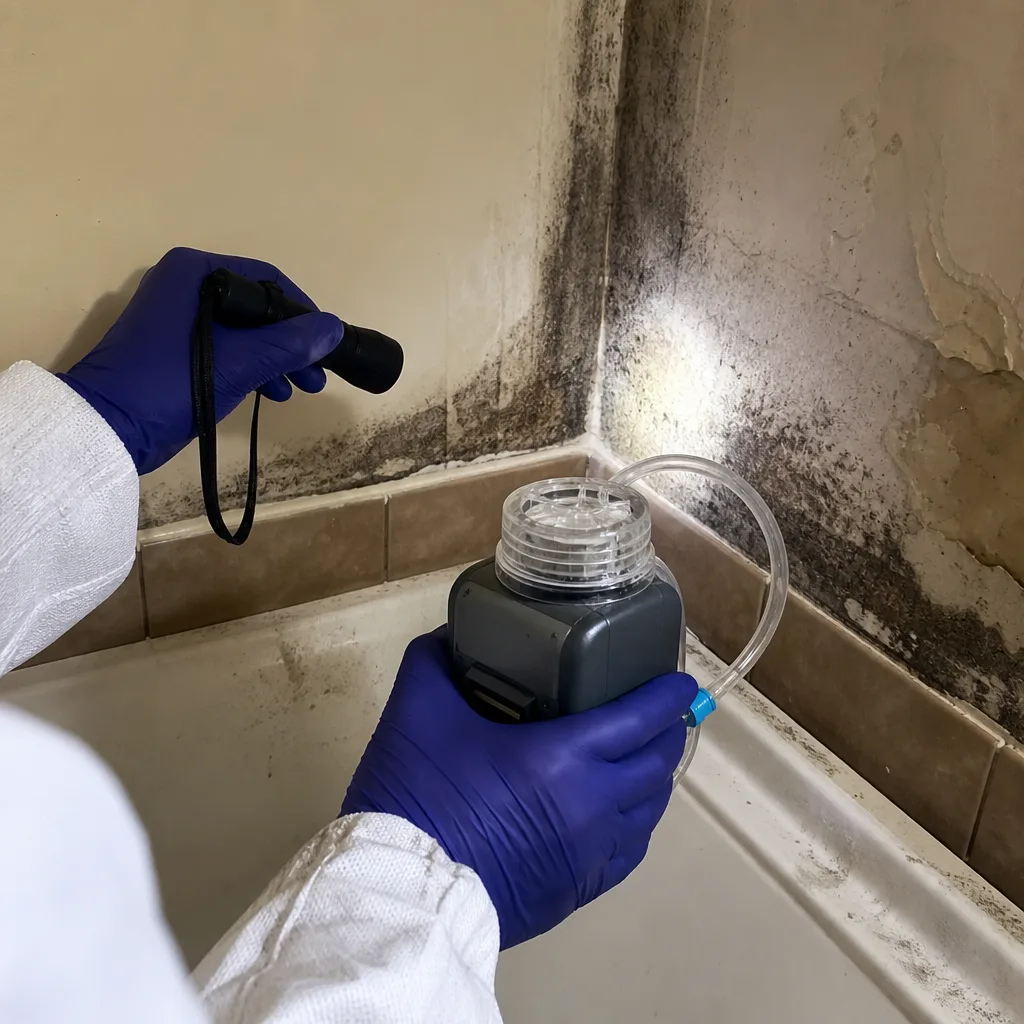
White powder on concrete block walls, garage floors, or foundation perimeters is efflorescence: soluble salts deposited by evaporating water. It is not mold. It is not “just cosmetic.” It is a pressure indicator, and reading it correctly tells you whether your drainage system is functioning.
The mechanism. Water moves through concrete by capillary action and vapor diffusion. When that water reaches the surface and evaporates, it leaves behind calcium hydroxide, sodium sulfate, and other salts present in the cement matrix. The rate of efflorescence formation is directly proportional to the volume of water moving through the material. Heavy, recurring efflorescence means heavy, recurring water movement.
Anaheim-specific contexts. In Anaheim’s flatland neighborhoods with original concrete slab construction, garage floors commonly show efflorescence along the perimeter where the slab meets the foundation wall. This indicates either a missing or failed perimeter drain, or a slab poured without a vapor barrier. In hillside construction - Anaheim Hills, specifically - efflorescence on retaining walls and below-grade stem walls signals inadequate drainage at the uphill side, where hydrostatic pressure builds during winter storms.
Reading severity. Light, powdery efflorescence that brushes off easily and does not recur after cleaning suggests a single wetting event - construction moisture, or a one-time irrigation overspray. Crystalline, hardened efflorescence that reforms within 2-4 weeks of cleaning indicates an ongoing moisture source. The most severe form, subflorescence, occurs when salts crystallize below the surface, causing spalling and surface degradation. This is structural damage, not a cleaning issue.
The drainage connection. Efflorescence is a symptom; the disease is water management. In Anaheim, where annual rainfall is concentrated in December through March but where irrigation runs year-round, the moisture source may be plumbing, landscape, or surface drainage. Correct diagnosis requires tracing the water path: roof downspout discharge, irrigation spray patterns, soil grade relative to slab, and neighbor runoff. We have resolved efflorescence cases in Anaheim that required no interior work at all - only regrading and downspout extension.
Document efflorescence with dated photographs. If it progresses from powdery to crystalline to spalling, you have a timeline of increasing moisture pressure that supports an insurance or warranty claim.
How to Use a $30 Moisture Meter Like a Restoration Technician
A pin-type moisture meter is the single most cost-effective tool a homeowner can own for damage prevention. It transforms subjective worry into objective data. Here is how to use it correctly.
Equipment selection. Purchase a pin-type meter, not a pinless (surface-scan) model. Pinless meters measure density and can be fooled by metal fasteners, foil-backed insulation, or paint thickness. Pin meters measure electrical resistance between two probes - directly correlated to moisture content in hygroscopic materials. Brands we have field-tested and trust include Protimeter, Delmhorst, and General Tools models in the $25-$60 range. These are the same principles underlying the professional meters we deploy on Mold Remediation in Anaheim jobs, though our field units include species correction settings and data logging.
Measurement protocol for wood framing:
- Set the meter to “wood” scale (WME, wood moisture equivalent)
- Insert pins parallel to grain, not across it - cross-grain readings run 2-4% high
- Measure at multiple depths if possible; surface readings may be 5-8% lower than core readings in thick members
- Record the reading, location, date, and time
- Re-measure at 48-hour intervals to establish trend
Measurement protocol for drywall:
- Set meter to “drywall” or “reference” scale
- Insert pins through paint or texture - the small holes are easily patched
- Measure at stain center, stain edge, and 12 inches from visible damage (baseline)
- Baseline readings in unaffected drywall typically run 0.4-0.8%
- Elevated begins at 1.0%; active damage typically exceeds 1.5%
Measurement protocol for concrete:
- Use a meter with a masonry scale, or apply the relative scale with known baseline
- Measure at multiple points; concrete is heterogeneous
- Compare to a known dry area of the same slab
- Significant elevation above baseline, or reading above 5% in a garage floor, warrants professional assessment
Critical understanding: single readings mislead. A moisture meter tells you what is wet now. It does not tell you whether the moisture is increasing, stable, or drying. The professional standard - IICRC S500 - requires trending data: minimum three readings over minimum 24 hours, or continuous data logging. When we document a Fire & Smoke Damage Restoration in Anaheim job that includes water damage from suppression, our drying logs record moisture content every 24 hours until the material returns to within 4 percentage points of dry standard. This documentation is what converts restoration invoices into paid claims.
Your $30 meter starts the documentation. If readings are elevated or trending upward, the next step is professional assessment with calibrated equipment, thermal imaging, and the written scope that Haven Standard, Clause 1 requires before any work begins.
The Documentation Gap: Why Measurements Beat Photos at Claim Time
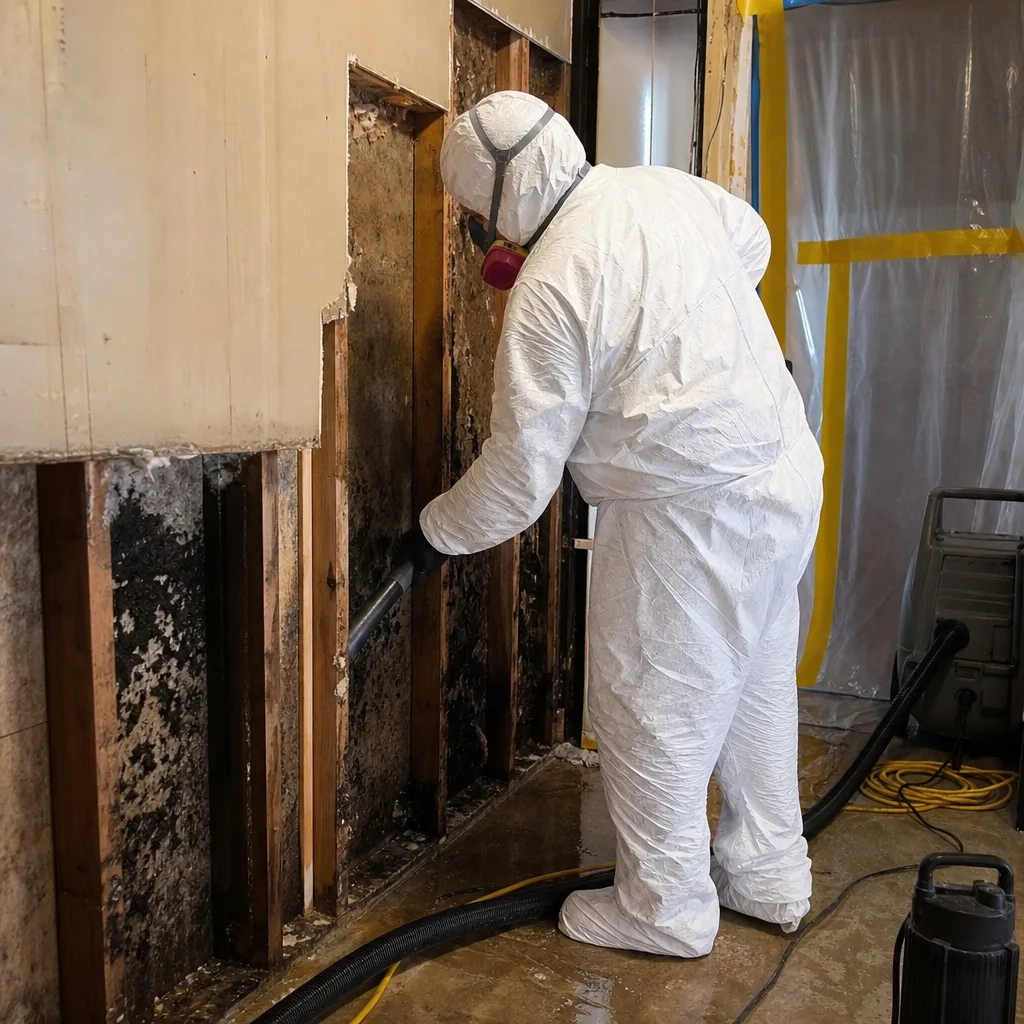
This is the core thesis of our work at DryMark Restoration Anaheim, and it is the reason this guide and our more guides & resources exist. The documentation gap - the difference between what a homeowner knows and what they can prove - is where insurance claims are lost.
A photograph of a water stain proves a stain existed. It does not prove the stain was active, that it caused secondary damage, or that the remediation proposed was necessary. A moisture reading of 22% in adjacent framing, logged daily for five days, with a corresponding dehumidifier grain depression log and daily atmospheric readings - that is a proof structure. Adjusters pay proof structures. They deny photographs.
The Haven Standard was built to close this gap. Every job we perform in Anaheim includes:
- Written price before work begins - Haven Standard, Clause 1
- Photo record on every visit, with each image timestamped and geotagged
- Daily moisture logs with equipment readings, material-specific targets, and dry-standard verification
- Psychrometric data: temperature, RH, dew point, and vapor pressure differential at each monitoring point
- 365-Day Done Right Promise: written warranty, not verbal assurance
We founded this company in 2011 after seeing homeowners lose legitimate claims because they could not produce the documentation that their policy required. The adjuster who denied those claims was not malicious. The policy language was specific: “direct physical loss,” “sudden and accidental,” “necessary and reasonable.” Without measurements, a homeowner cannot establish any of these standards. With measurements, they rarely need to argue.
The equipment we deploy - Dri-Eaz and Phoenix dehumidification systems, XPOWER and B-Air air movers, Injectidry cavity drying systems - produces data as a byproduct of operation. Runtime hours, grain depression curves, and amp draw logs are automatically generated. This data, formatted to IICRC, RIA, and IFA documentation standards, becomes the substrate of your claim file.
Our Free Second Opinion on any competitor’s written estimate exists for the same reason. Many estimates we review in Anaheim lack moisture readings, lack drying targets, and propose demolition without documentation of material saturation. These are not estimates; they are proposals to spend your money without proof of necessity. We will review any written estimate at no charge and tell you what documentation should support it.
Common Mistakes to Avoid
- Waiting for the stain to “dry out on its own.” In Anaheim’s climate, surface drying happens quickly; cavity moisture persists for months. A dry surface over wet substrate is how mold establishes behind finished walls.
- Assuming new construction means no risk. Anaheim’s building boom in the 2010s included numerous tract developments with accelerated schedules. We have found failed flashing, missing weep screeds, and unsealed penetrations in homes less than 5 years old.
- Painting over stains without moisture verification. Latex paint is not a moisture barrier. Painting over an active leak traps moisture, accelerates substrate degradation, and eliminates the visual warning sign that would have prompted earlier intervention.
- Trusting consumer-grade mold test kits. Settle plates and air sampling cassettes without controlled airflow measurement produce meaningless results. Every spore count needs a cubic-foot-per-minute reference and an outdoor baseline. Uninterpreted data is worse than no data.
- Ignoring seasonal patterns. In Anaheim, January-March moisture events are driven by rain; July-September events are driven by irrigation and AC condensate. The same warning sign in different seasons points to different sources.
- Failing to document before cleanup. Insurance claims require evidence of origin and extent. Photograph everything before moving or drying. Your phone timestamp is admissible documentation.
- Accepting verbal scope or pricing. Haven Standard, Clause 1 exists because verbal agreements cannot be enforced, cannot be adjusted, and cannot be submitted to insurance. Every restoration proposal should be in writing before work starts.
When to Call a Professional
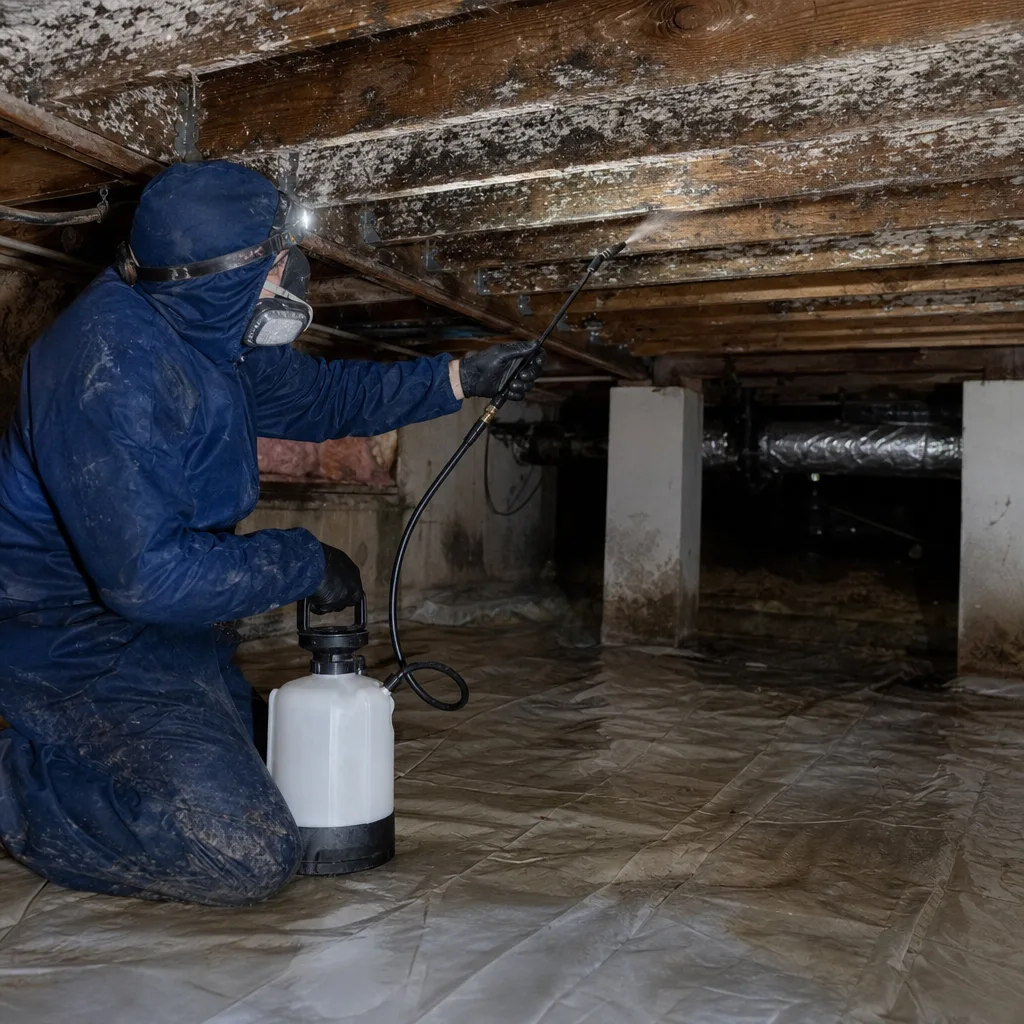
Call for professional assessment when: moisture readings trend upward over 48 hours; you detect musty odor that persists beyond ventilation; efflorescence recurs after cleaning; stucco cracks widen or follow a stair-step pattern; or your HVAC drain pan shows rust or standing water. These are not emergencies in every case, but they are conditions that will not self-resolve.
For active water intrusion - dripping ceilings, flowing water, saturated flooring - speed matters. Mold colonization in Anaheim’s climate can begin within 48-72 hours of material saturation. Professional extraction and controlled drying, documented from hour one, prevents secondary damage and preserves your claim position.
DryMark Restoration Anaheim offers free estimates in Anaheim. Our live dispatch answers every call, 24 hours a day, 7 days a week - no voicemail, no next-business-day callback while water is still moving. Every estimate includes a written price before work begins, documented to Haven Standard, Clause 1. Call (909) 525-4167.
Frequently Asked Questions
Mold colonization can begin 48-72 hours after organic materials reach sustained moisture content above 16%, given temperatures between 60-80°F. Anaheim’s climate maintains these conditions for most of the year, which is why rapid structural drying - with documented moisture logs - is critical within the first 24 hours. Call (909) 525-4167 for emergency assessment.
Most homeowner policies cover “sudden and accidental” water damage but exclude long-term leakage. The key is documentation: moisture readings that establish when the event began, photos that show progression, and a written scope that distinguishes recent damage from pre-existing conditions. Our photo-documented assessments are designed specifically for this claims requirement. We also coordinate directly with adjusters.
Remediation is required when mold growth exceeds 10 contiguous square feet, involves HVAC systems, or occurs in areas with immune-compromised occupants. Cleaning is appropriate for isolated, surface-only growth under 10 square feet on non-porous materials. The distinction should be made by inspection with moisture verification, not visual guesswork. Our Free Second Opinion will review any competitor’s remediation proposal at no charge.
Efflorescence indicates water is moving through your concrete slab, carrying dissolved salts to the surface. In Anaheim’s flatland neighborhoods, this typically signals a missing or failed vapor barrier beneath the slab, or inadequate perimeter drainage. Recurring efflorescence is not a surface problem; it is a drainage problem that will eventually degrade the slab and any flooring installed over it.
The only reliable method is moisture measurement. A pin meter reading of 12% or below in adjacent framing, with stable readings over 48 hours, indicates a dry, historical stain. Readings above 16%, or any upward trend, indicate active moisture movement. Color, texture, and “feel” are unreliable indicators - we have seen dry stains that were brown and soft, and active leaks that presented as faint discoloration.
Insurance does not typically cover estimate reviews. However, our Free Second Opinion on any competitor’s written estimate is provided at no charge as a standalone service. We review the scope for documentation adequacy, moisture verification, and pricing alignment with industry standards. This has no impact on your deductible or claim status.
The Bottom Line
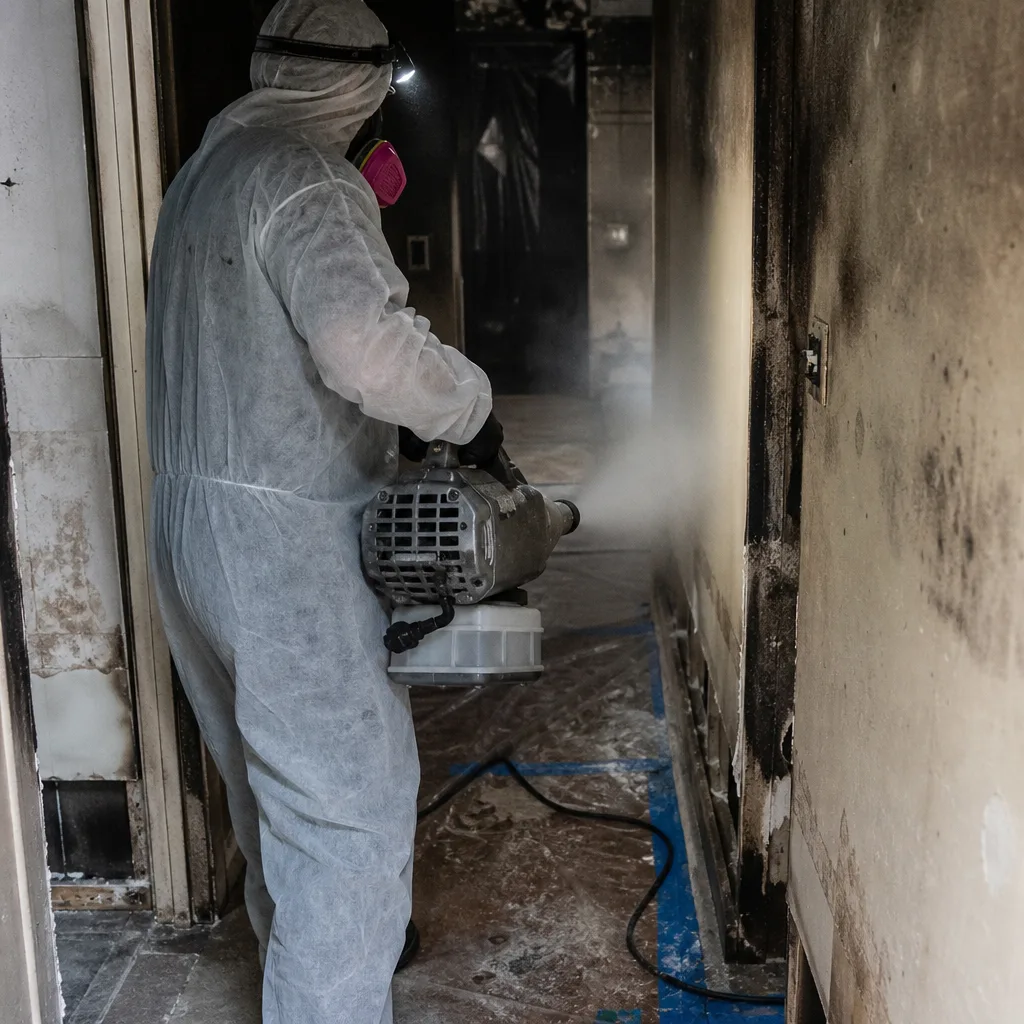
Damage restoration begins with recognition, but recognition without measurement is just worry. The warning signs in your Anaheim home - stains, odors, cracks, and powders - are data points waiting to be collected. A $30 moisture meter, seasonal HVAC checks, and dated photographs transform subjective concern into objective documentation. When that documentation shows active, elevated moisture, professional intervention with written scope, photo record, and daily drying logs protects both your structure and your claim. The goal is not to eliminate every risk; it is to know which risks require action this week, and to have the proof ready when your adjuster asks.
Written by Alicia Brennan, Owner at DryMark Restoration Anaheim, serving Anaheim since 2011.